

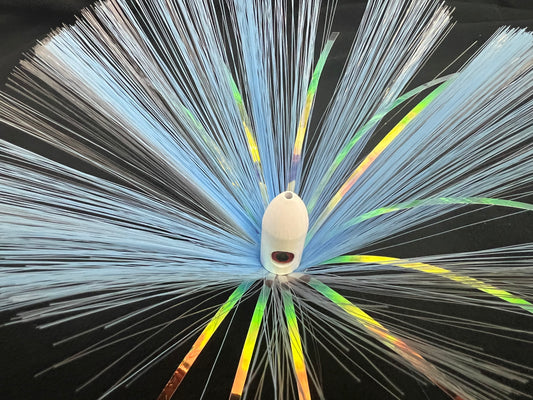
 Caught on a blue/white Joe Shute
The original skirted ballyhoo head
The original Joe Shute.Built for tuna.
Hand-tied in the USA and trusted on the tuna grounds for more than 25 years. Keel-weighted heads from 1 to 10 oz that keep a rigged ballyhoo swimming straight, from the flat lines to the shotgun.
- Hand-tied in the USA
- 25+ years on the troll
- Tournament proven
- Hand-tied in the USAEvery skirt tied by hand
- 25+ yearsOn charter and tournament spreads
- Keel weightedBuilt to run upright, not spin
- 1 to 10 ozA head for every spot in the spread
Shop by target
What are you fishing for?
Pick the fish. We will show you the heads and rigs that belong in that spread.


Start with the standards
-
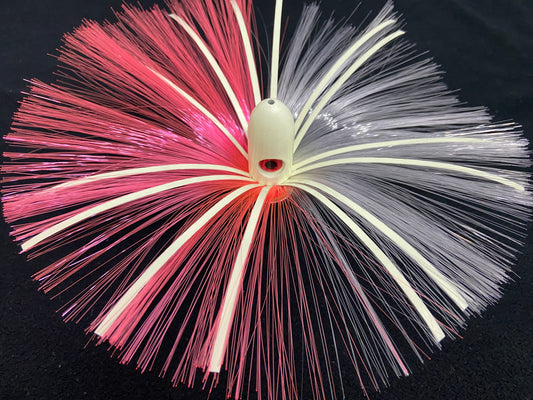
Yellowfin Series 1oz
Regular price From $16.99Regular price -
Nickel Head Series 3oz
Regular price $24.95Regular price -
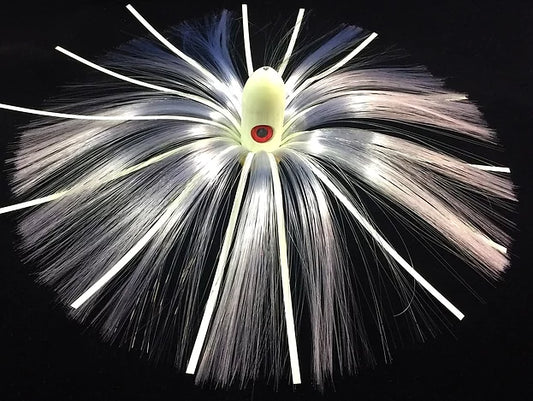
Glow in the Dark Series 1oz
Regular price $19.95Regular price -
Joe Shute rigged with Magic Ballyhoo
Regular price $64.99Regular price -
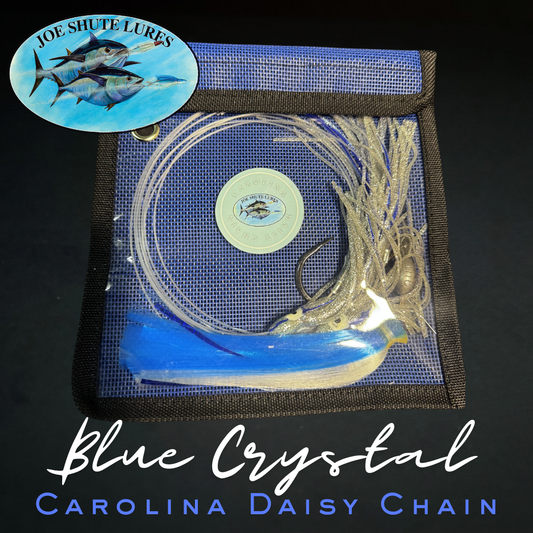
Joe Shute Carolina Daisy Chain
Regular price $69.99Regular price -
Pre Rigged Giant Bluefin Tuna Leader
Regular price $49.99Regular price -
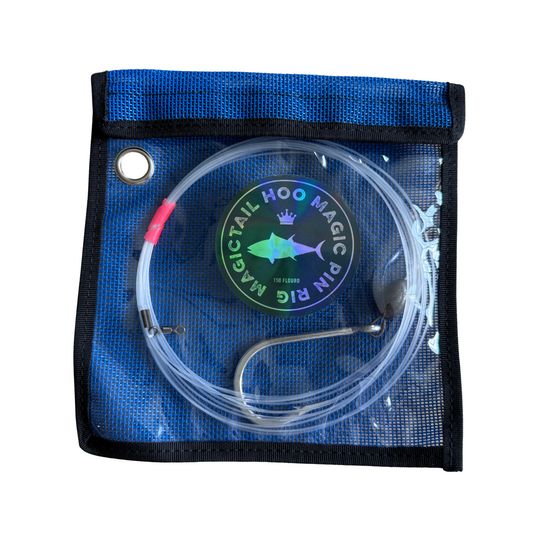
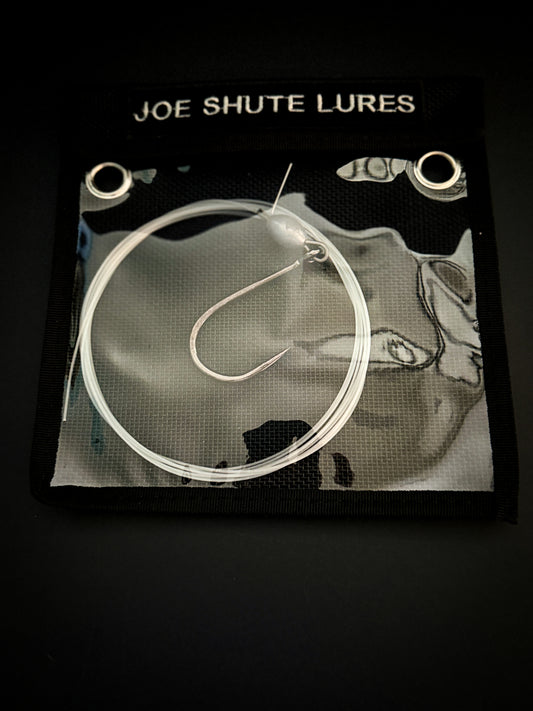
Pre-Made Ballyhoo Pin Rig
Regular price $39.99Regular price -
Joe Shute Fish Finder Lantern Series 3oz
Regular price From $27.95Regular price




Pick your weight
One head for every spot in the spread
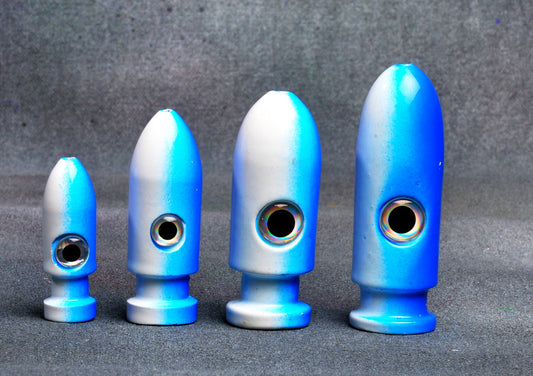
Weight decides where a Joe Shute runs and how deep it holds a bait. Start with the 3 oz original, then add lighter and heavier heads as your spread grows.
Yellowfin Series
The light head for canyon fishing with small and medium ballyhoo. A match for 20 and 30 lb class outfits.
Big Hole Series
An oversized center hole slips over a loop eye, so you can swap ballyhoo on a dredge without cutting anything.
Bluefin Series
The original weight, and the everyday head for mid-shore bluefin and canyon tuna on 50 and 80 lb outfits.
Deep 6 Series
Extra weight to hold a big ballyhoo down when the fish are marking deep or the seas are up.
Flat Liner Series
Made for bigeye, which tend to rise on a flat-lined bait. Also heavy enough to hold a shotgun bait in the water far behind the boat.
Wahoo Cruiser
The heavyweight for high-speed wahoo trolling. Order it bare or rigged.
Series roles as described by Gary Caputi in Salt Water Sportsman, “Fishing Weighted Ballyhoo.”

Rigged and ready
Joe Shute with Magic Ballyhoo
A hand-tied Joe Shute head matched to a Magic Ballyhoo and rigged for you. Clip it on and start trolling.
- Ready to fish out of the bag, no rigging required
- Head and bait matched to run without spin
- Six color combinations
Build the spread
Where each Joe Shute runs
A five-line starter spread: two flat lines, two riggers and a shotgun. Add lines as your crew and cockpit allow.
-
Flat lines
Closest to the boat, about 25 to 35 feet back. The 8 oz Flat Liner was made for this spot, because bigeye tend to rise on a flat-lined bait. Flat Liner 8 oz →
-
Short riggers
Roughly 75 to 100 feet back. A natural home for a daisy chain or spreader bar, with a light head and ballyhoo trailing behind as the stinger. Carolina Daisy Chain →
-
Long riggers
Around 150 to 200 feet back. A good spot for a 3 oz keel-weighted head over a ballyhoo, set to trail the bar on the short rigger. Bluefin Series 3 oz →
-
Shotgun
Down the middle and farthest back, 250 to 300 feet or more. Heavier heads keep a long bait in the water, which helps on fussy bluefin. Deep 6 Series →
Distances and the five-line layout: John Unkart, FishTalk Magazine. Positions and head weights: Gary Caputi, Salt Water Sportsman. Bluefin and yellowfin speeds: Capt. Kirk Fay, The Fisherman. Wahoo speed: Capt. Mark Henderson, quoted in Sport Fishing. Treat every number as a starting point and adjust until the bait swims without spinning.
Lures in action
Caught on a Joe Shute
Real fish, real crews. Send us yours and we may add it to the wall.


See them swim

Our story
Tied by hand. Proven on the troll.
Joe Shute lures started with one idea: a pre-tied, weighted skirt that makes a rigged ballyhoo swim straight and stay in the water. Salt Water Sportsman traces the design to Capt. Joe Shute of Atlantic Beach, North Carolina, whose original head weighed 3 ounces.
More than 25 years on, every skirt is still hand-tied in the United States, and the lineup runs from a 1 oz canyon head to a 10 oz wahoo weight.
Straight answers
Joe Shute questions, answered
What is a Joe Shute lure?
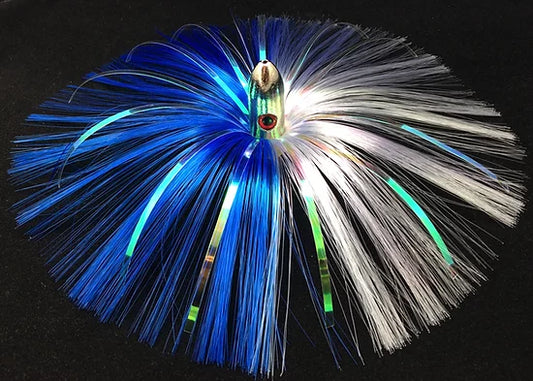
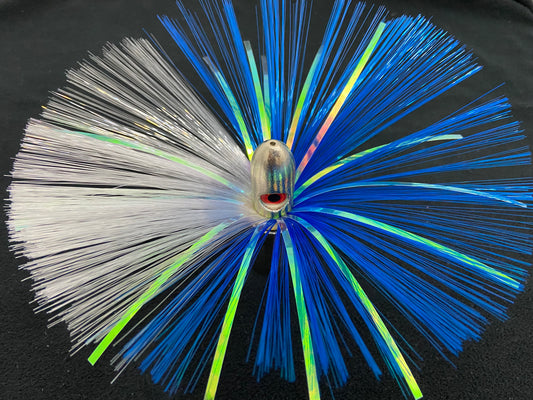
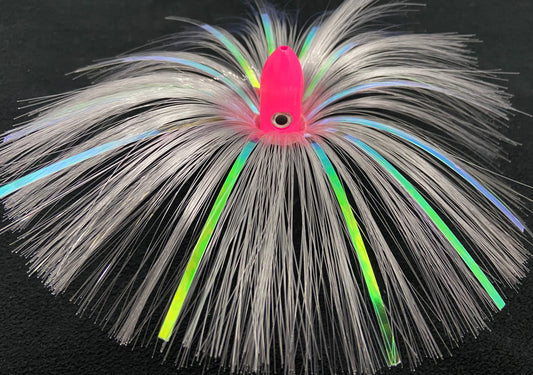
A Joe Shute is a weighted, bullet-shaped head dressed with long nylon hair, crystal flash and Mylar, made to be fished over a rigged ballyhoo. The skirt is tied in reverse so it billows back over the bait in the water. Salt Water Sportsman credits the design to Capt. Joe Shute of Atlantic Beach, North Carolina, and The Fisherman has written that the name became synonymous with skirted ballyhoo.
What size Joe Shute should I use?
Start with 3 oz, the original weight. Salt Water Sportsman reports New Jersey captain Mark DeBlasio fishing mainly 3 oz keel-weighted heads on 50 and 80 lb outfits, and 1 to 2 oz heads on 20 and 30 lb class tackle for white marlin and yellowfin. Go heavier, up to 8 oz, in rough seas or for a shotgun bait set far back.
How fast should I troll a Joe Shute and ballyhoo?
Use speed as a starting point and watch the bait: it should swim, not spin. Writing in The Fisherman, Capt. Kirk Fay settles around 5 to 5.5 knots for bluefin and about 6 to 7.5 knots for yellowfin. FishTalk Magazine gives 6 to 7 knots as a rule of thumb whenever natural baits are in the spread.
What colors work best for tuna?
Preferences change by the day, so carry a spread of colors. FishTalk Magazine calls a blue and white skirt over a medium ballyhoo a popular charter bait, lists green, pink and blue/white as consistent for yellowfin, and suggests black/purple on overcast days and early mornings. In Salt Water Sportsman, Capt. Mark DeBlasio mostly trolls crystal hair mixed with Mylar and notes that dark colors tend to produce early and late in the day.
Will a Joe Shute stop my ballyhoo from spinning?
It helps a lot. The Fisherman describes Joe Shute heads as very forgiving: they make a less-than-perfect ballyhoo swim straight and still catch fish. The Keel Weighted models are built to keep the bait's dark side up and light side down, according to Salt Water Sportsman. A cleanly rigged bait still matters, so check each one beside the boat before you send it back.
Do I need a permit to fish for tuna?
Yes. In U.S. Atlantic waters recreational anglers need a federal permit to fish for bluefin and yellowfin tuna, and size and retention limits apply. Rules change during the season, so check NOAA Fisheries and the HMS Permit Shop before each trip.